Michelle Osis’s Horror Textures - Words & Music Magazine
The screen composer’s journey from classical training to screen composition
Story by Nancy Dutra | July 14, 2026
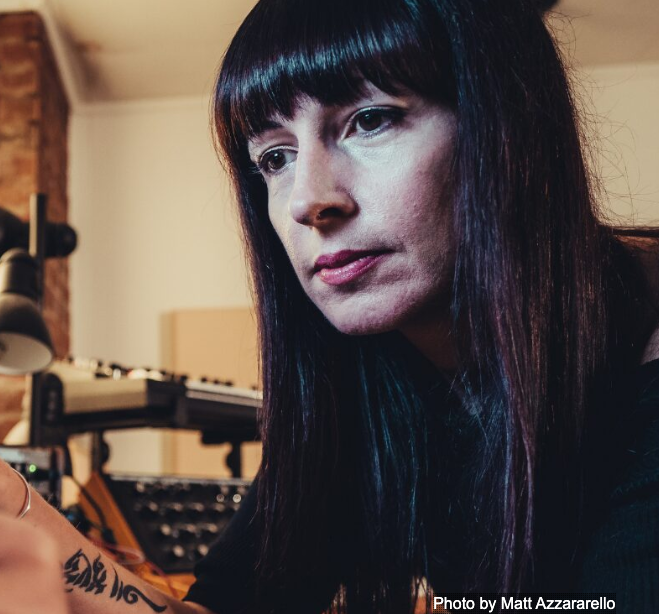
Michelle Osis was three years old when her mom sat her down at the family piano. “My mother had a great ear but couldn’t read music,” Osis says. “She wanted to see if I had any kind of natural ability. I started hearing songs on the radio and playing by ear.”
The Ontario-based Osis has long been fascinated by experimental and embodied approaches to creating music in addition to her classical training. While she studied classical piano for 20 years, obtaining her associate levels through the Sydney Conservatorium of Music in her native Australia, she also studied at the Australian Institute of Music and the Australian Film Television and Radio School (AFTRS).
After graduating, Osis wanted to gain experience in film scoring. “I worked on a lot of short films and mostly free opportunities just to build up those credits. I was really pushing short films and commercial work.”
As her career progressed, she became increasingly interested in pursuing film and television projects. “When the opportunity came to move to Canada, I decided to take that leap. My ex-husband is Canadian and works on TV, so he accepted a position in Toronto.”
She participated in the Canadian Film Centre’s Slaight Music Residency program, and here she’d begin an important professional relationship with the highly regarded film composer Mark Korven, who became her mentor.
Osis was drawn to Korven’s eerie and tension-driven aesthetic. “We both do a kind of dark, atmospheric sound and I wanted to develop that some more, so I kept in touch with him,” she says. “Over time, our relationship evolved organically into a collaboration.” The two continued to join forces as Osis began contributing additional music and sound design elements. “There was a growing level of trust creatively,” she says.
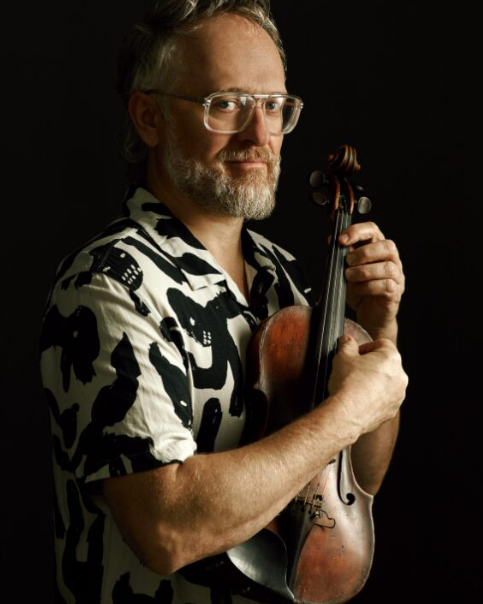
Working with Korven—known for co-creating the instrument the Apprehension Engine with Tony Duggan-Smith—drew Osis into darker, more textural sonic spaces.
“We worked on Billy the Kid Season 2 in 2023, where he brought me on as an additional composer.” After working on the western thriller, she and Korven co-composed the music for the Netflix thriller Don’t Move (2024), which ranked in the platform’s Top 10 following its release, marking a major international breakthrough.
Then came Season 3, the final season of Billy the Kid. “This time around,” says Osis, “I was brought on as a co-composer.”
Osis is passionate about modular synthesis, where sound is built from interconnected units rather than a fixed instrument. She says, “Synthesis is all about the tactile. You can create sounds, which is so different from sitting at a keyboard and finding preset sounds from a library.”
For Osis, horror scoring is rooted in examination and texture, while tonal work aligns more closely with documentary and drama. “The process for scoring a horror film is very much associated with exploring palette more so than somatic material in a sense of tonality,” she says. “It’s more about experimenting and finding unusual elements that sometimes create a central scene more so than an actual tonal scene. As much as I love working on horror, I also love tonality.”
That duality runs through her recent work. Osis has scored documentaries such as Murder on the Inca Trail, for which she won a Canadian Screen Award in 2024, and the 2024 IMAX documentary T.Rex. Her horror work has expanded in parallel, including the 2024 Hulu/Disney+ feature Carved and the 2025 Shudder feature Night of the Reaper.
“As a composer and artist, I have two very distinct sounds, but they kind of combine together. A lot of the documentary sounds I do are more synth-driven. With horror, I’ve got that kind of experimental sound as well.”
Much like accompanying a singer and making space for lyrics, she is careful not to let sonic textures overwhelm documentary dialogue.
Osis also makes time for her own music, but she finds scoring work easier largely because of the constraints of specific projects. Such limitations give her a sense of freedom. She tries to strike a balance between her career and personal life.
“Because the industry has slowed down in a lot of ways, I feel like we tend to say yes to every opportunity that comes along,” she says. “I understand why people do that, but, at the same time, I’ve learned that constantly running at that pace can lead to burnout.”
Osis is focused on building a sustainable creative life. “During work, I generally focus on collaborating with good people and making sure I can bring my best creatively without completely running myself to the ground.”
https://www.socanmagazine.ca/features/michelle-osiss-horror-textures/


 .
.